Podcast
AI and Brand Trust: What Marketers Are Missing in 2026
July 07, 2026
September 04, 2026
All Blogs Brand Strategy: How to Build a Brand People Choose, Remember and Recommend
Somewhere along the way, B2B marketing decided that looking serious meant sounding serious. So we got the grey websites, the blue gradients, the stock photo of three people staring thoughtfully at a laptop, and enough "end-to-end solutions" to put an entire conference room to sleep.
Most leaders think a "brand" is a logo, a polished website, or a clever tagline. It's not. Your brand is what people in your target market think and feel about your business, and brand strategy is how you shape that perception and give people a reason to choose you. Even a great product can stay invisible if the market doesn't understand what makes it worth choosing.
Selling enterprise software, industrial equipment, or professional services is fundamentally different from selling sneakers or everyday consumer products (B2C).
| Strategic Element | B2C (e.g., Nike, Coca-Cola) | B2B (e.g., Salesforce, AWS) |
|---|---|---|
| Primary Buyer | Single consumer | A committee of 5-10 stakeholders |
| Purchase Driver | Emotion, status, impulse | Logic, ROI, risk reduction |
| Sales Cycle | Minutes to days | Months to years |
| Brand Goal | Maximize immediate desire | Maximize long-term trust |
In B2B, the stakes are much higher. If a consumer buys a bad pair of shoes, they lose $100. If a B2B buyer picks the wrong enterprise software or agency, they put their credibility, and sometimes their job, on the line.
That's why B2B buyers often gravitate toward brands that feel like the safe choice. The old saying, "No one ever got fired for buying IBM," captures this perfectly: when the perceived risk is high, a trusted brand can make the decision easier to defend.
Therefore, the fundamental truth of B2B marketing is this: People buy based on emotion (trust, safety, prestige), and they justify the purchase with logic (ROI, features, integrations).
Positioning is where your brand "sits" in the customer's brain compared to your competitors. If we say "Volvo," you think Safety. If we say "Ferrari," you think Speed. That is positioning.
Are you the premium, highly customized enterprise solution? Or are you the affordable, agile, out-of-the-box SMB tool? You cannot be both. When you try to be everything to everyone, your brand becomes diluted, and nobody remembers you.
Answer two quick questions below and watch where your brand actually lands on the map, next to the competitors already crowding it (or the white space nobody's claimed yet).
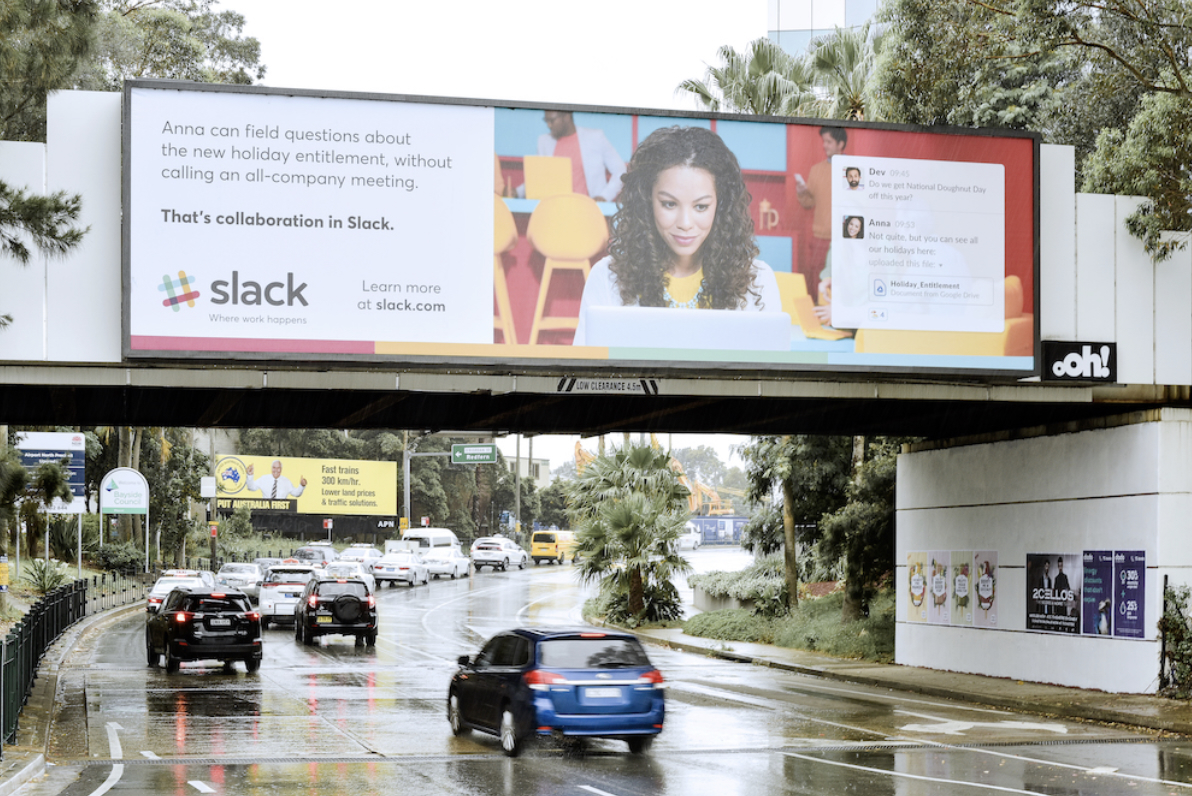
Let's look at how this works in reality. Before Slack, enterprise communication was synonymous with rigid, siloed email threads. Slack entered the B2B market and aggressively positioned themselves as the anti-corporate alternative.
Source: Brand Strategy Lab
They didn't sell "Enterprise Communication Protocols". They sold "Where Work Happens": friendly, colorful, and highly collaborative. They looked at the matrix, saw that every legacy competitor was sitting in the "Boring/High Complexity" quadrant, and deliberately moved to the opposite end. They found the white space and dominated it.
The most common reason enterprise deals stall is that the brand only appeals to the end-user. A successful B2B strategy creates messaging pillars for every decision-maker in the boardroom:
The End-User: Needs to know the product is intuitive and saves time.
The Economic Buyer: Needs clear proof of return on investment (ROI) and cost consolidation.
The Technical Buyer: Needs assurance regarding security protocols, compliance, and integration.
If your website, sales decks, and content do not address all three pillars, your brand strategy is incomplete.
Once you know who you're talking to and what space you want to own, the next question is how you actually look and sound. This is where the creative side of branding comes in.
Brand Identity: Your visual footprint, logos, typography, website UX.
Brand Voice: The tone of your messaging (academic? direct? reassuring? witty?).
For decades, B2B brands assumed sounding serious meant sounding like a compliance memo. Every claim got wrapped in three qualifiers, "thought leadership" meant restating the obvious in longer sentences, and somewhere a legal team was quietly approving the word "innovative" for the fortieth time that quarter.
But remember: businesses don't buy things. Humans who work at businesses buy things. And humans want to be engaged, not put to sleep by their vendor's website.
Look at IBM, a massive tech giant that used to be incredibly stiff. Recently, they shifted their brand voice from "corporate technology provider" to a dynamic invitation: "Let's create". It is collaborative, human, and appeals directly to the builders using their tools.
Source: IBM modernizing its B2B voice | The Work
Consider Salesforce. They created a learning ecosystem called Trailhead. Instead of styling it like a dry corporate manual, they branded it like a national park adventure, complete with badges and mascots. They gamified B2B learning, proving that enterprise buyers respond to creativity.

Source: The Trailblazer, Salesforce
A strong brand strategy has to hold up beyond the marketing team. Your website, sales conversations, content, and leadership presence should all reinforce the same position, even though each one plays a different role in the buying journey.
When these pieces work together, your brand becomes easier to recognize and easier to trust. You spend less time explaining why you're different and more time building on what the market already knows you for.
Founders often struggle with brand marketing because it doesn't offer the immediate gratification of a performance marketing campaign. You can't always track a reputation shift on a daily dashboard. The key is to look at the signals that show whether your brand is becoming more familiar, trusted, and relevant to the people you want to reach.
Building a B2B brand strategy isn't about making your company look pretty. It's about engineering a system that creates value, earns trust, and fundamentally lowers your cost of acquisition over the long term.
But you don't have to do it alone.
If you have a strong product but are finding it difficult to communicate its value, bringing in an experienced marketing leader can help you work through the positioning, messaging, and go-to-market questions without committing to a full-time executive hire.
Need help finding your White Space?
Our Fractional CMOs work with founders and marketing teams to define positioning, sharpen messaging, and build practical go-to-market strategies for complex B2B businesses. We work alongside your existing team to turn the strategy into something they can actually use across marketing and sales.
If your brand feels harder to explain than your product should be, let's talk.
B2B brand strategy is how you shape what people in your target market think and feel about your business, and give them a reason to choose you. It covers positioning, messaging for every buyer in the committee, identity and voice, and the way that brand shows up across your website, sales conversations, content, and leadership presence.
B2C brands usually sell to a single consumer, driven by emotion, status, and impulse, with a sales cycle measured in minutes or days. B2B brands sell to a committee of stakeholders, over months or years, and win by reducing perceived risk. The goal is long-term trust, not immediate desire, even though emotion still starts the decision and logic is used to justify it.
Brand positioning is where your brand sits in the customer's mind compared with competitors. In B2B, that usually means choosing a clear space, such as premium customized enterprise software or an affordable out-of-the-box SMB tool, rather than trying to be both. Slack found white space by positioning against rigid, siloed email instead of competing as another corporate communications protocol.
Build messaging pillars for every decision-maker, not only the end-user. The end-user needs to know the product is intuitive and saves time. The economic buyer needs proof of ROI and cost consolidation. The technical buyer needs assurance on security, compliance, and integration. If your website, sales decks, and content skip any of those three, deals stall.
Track leading indicators first: branded search volume, inbound demo quality, and whether strong talent is easier to hire because of reputation. Over time those signals should show up as lagging indicators: shorter sales cycles, higher win rates against competitors, and less price sensitivity. Brand measurement is slower than a performance campaign, but the revenue impact is visible if you look at the right signals.
No. Businesses do not buy things; humans who work at businesses do. IBM shifted from sounding like a corporate technology provider to "Let's create." Salesforce turned product education into Trailhead, a gamified national-park-style experience. Serious buyers still respond to brands that are clear, human, and distinctive.
September 04, 2026
How relevant and useful is this article for you?