Blog
Generative Engine Optimization: How B2B Brands Win in AI Search
September 22, 2026
December 09, 2025Updated on: June 18, 2026
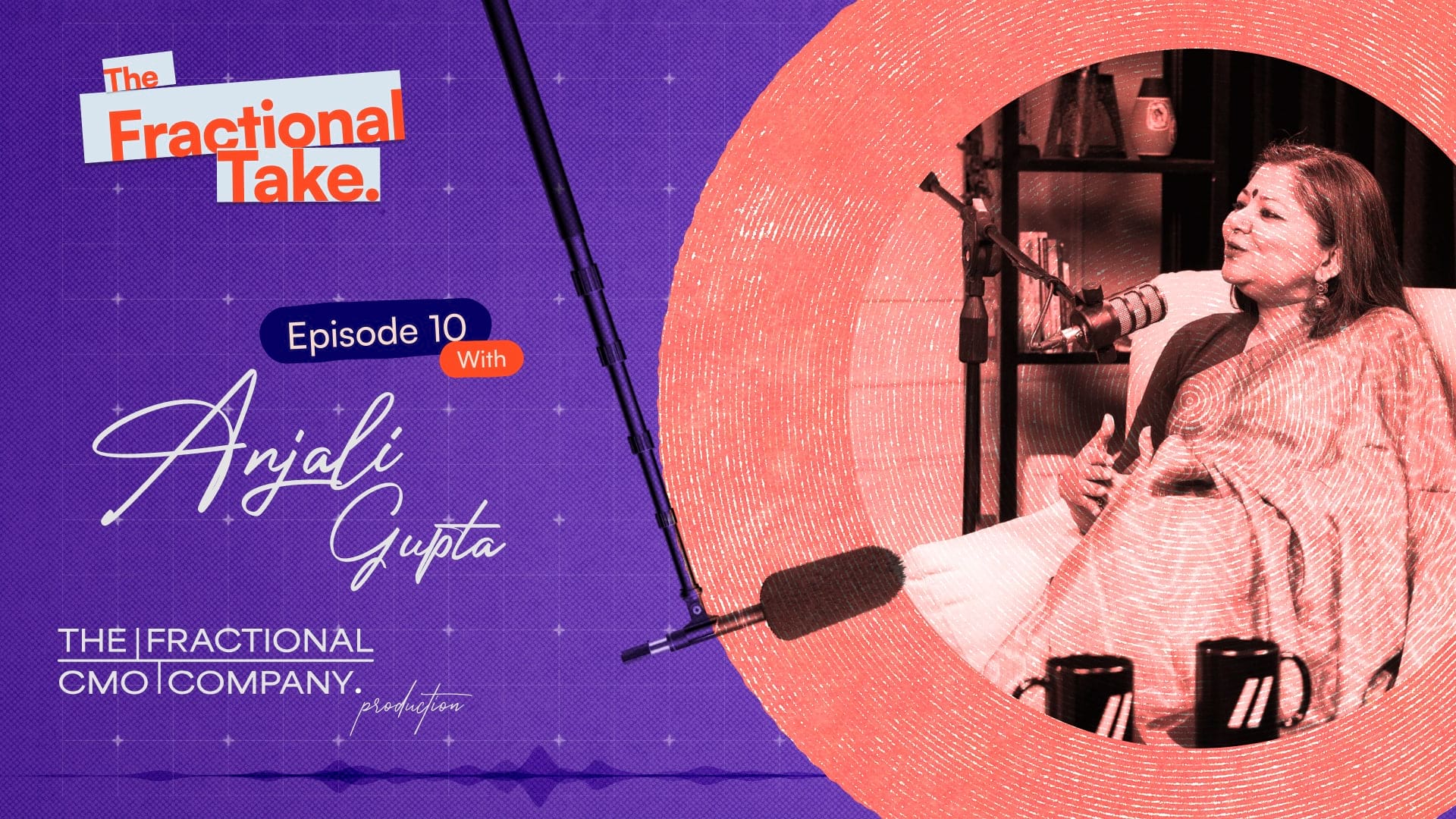
All Podcasts The Fractional Take with Anjali Gupta, Ep. 6 - The Death of Institutional Creativity
The advertising industry has been going through a period of transformation. Omnicom and IPG announced a merger, and more than 4,000 jobs were cut in the process. Legacy names that shaped entire creative eras are being folded under the banner of "efficiency."
In this episode of The Fractional Take, Anjali Gupta argues that the real loss runs deeper than job titles or cost structures. What's disappearing is the distinct agency culture and "institutional memory" that taught generations of talent how to build brands. Creativity doesn't live in a boardroom; it lives in the friction of competing philosophies, in the rituals of a specific agency floor, in the accumulated wisdom of teams that fought over the same brief for years.
And that's what consolidation quietly erases.
The business logic vs. the creative cost of holding company mergers.
Why a legacy agency name no longer guarantees depth of creativity.
The shift from "institutionalized creativity" to small, sharp independent teams.
Why this moment of disruption is actually a massive opportunity for reinvention.
The consolidation happening across holding companies reflects something bigger than deal economics. It's accelerating a structural change in how the industry thinks about creative output and who delivers it best.
Here's how the two models compare:
| Dimension | Institutional Creativity | Agile Creative |
|---|---|---|
| Structure | Large integrated agency with multiple disciplines under one roof | Small, specialist team assembled per project or ongoing retainer |
| Creative direction | Hierarchical, shaped by group creative directors and legacy agency culture | Flat, driven by individual specialists with direct accountability |
| Brand building | Long-term immersion in a single account; deep, accumulated institutional knowledge | Fresh perspective built through focused briefs and rapid onboarding |
| Speed | Slower, with multiple approval layers and coordination overhead | Faster iteration cycles with fewer sign-offs required |
| Risk profile | Protected by agency reputation and historical track record | Highly dependent on the quality of team selection and brief clarity |
| Cost model | Retainer-heavy with embedded overhead | Project-based or fractional, costs tied directly to output |
What this comparison makes visible is a genuine trade-off: institutional models delivered depth and creative consistency over years, while agile models offer precision and faster cycles. As more senior creative talent exits holding companies and sets up independently, the real question for brand leaders is how to capture the benefits of both without losing the things that made either model worth choosing in the first place.
This shift in how brands approach creative production is part of the same underlying change we unpacked in the Creative Strategy episode. The patterns Anjali identifies here and there are connected, and taken together they point toward a fundamentally different model of how marketing gets made.
For a wider look at how this transition is playing out across the industry, AdWeek's coverage of Creative Leadership in Business tracks how senior leaders are responding to the same pressures in real time.
The Fractional Take is a podcast hosted by Anjali Gupta, Founder of The Fractional CMO Company, where she shares practical insights on marketing, go-to-market strategy, brand building, and business growth. Each episode tackles real challenges facing businesses today and offers actionable advice that leaders can put to work right away.
Designed for founders, business leaders, and growth teams, The Fractional Take cuts through the noise with quick, thoughtful perspectives on what drives sustainable growth in today's market.
December 09, 2025
Updated on: June 18, 2026
How relevant and useful is this article for you?